


Why Disability Insurance Is the Most Overlooked in a Financial Plan
Why Disability Insurance Is the Most Overlooked Piece of a Financial Plan Every financial plan runs on one thing: the income that funds it. Mortgages,...
According to the 2025 Milliman Long-Term Care Index, the average 65-year-old faces roughly $135,000 in lifetime long-term care costs. For extended care, that number rises far beyond what most retirement plans account for. But the dollar figure is almost the wrong starting point. A single care event doesn't just produce a large bill; it changes which accounts get drawn down, how much of that income gets taxed, what a surviving spouse has left to live on, and whether the estate plan still does what you intended.
Long-term care planning works best when it is woven into the full retirement plan early, not treated as a separate insurance question to answer later. The real decisions involve income protection, tax strategy, estate documents, and family roles, not just coverage options. Fortitude Wealth Planners builds these considerations into one coordinated plan so a future health event does not quietly unravel everything else you have worked to put in place.
.png?width=658&height=491&name=senior-couple-reviewing-retirement-documents%20(1).png)
When most people think about long-term care expenses, they picture a nursing home. But the full picture of what these costs include in a retirement plan is much broader, and planning only for the worst-case scenario often means missing the more common ones.
Medicare generally does not cover custodial care, which is the kind of help people need most: bathing, dressing, eating, and managing daily tasks at home or in a facility. That gap falls directly on the household. A realistic retirement plan needs to account for home care aides, assisted living, adult day services, care coordination, and home modifications. Not just full nursing facility costs.
Many people prefer to receive care at home, but that preference comes with a price tag. AARP's 2023 home care scorecard found that home care averaging 30 hours per week ran roughly $42,000 per year, and costs have been rising faster than general inflation. A June 2026 AARP report found that long-term care costs are outpacing both income and Social Security benefits in most states, which means relying on future income alone to cover care is a shaky assumption.
The more useful planning question is not "what will care cost exactly?" It is "what happens to our retirement income if care costs $3,000 a month for three years, or $6,000 a month for five?" Stress-testing the household plan across a range of scenarios, settings, and timelines gives a clearer picture of where the gaps are. Fortitude's retirement planning approach treats rising healthcare costs as a built-in planning variable, not an afterthought.
The households that navigate a care event without major financial disruption are rarely the ones that simply respond well in the moment. They are the ones that made room for it years earlier. When care spending is not built into the broader plan, it can crowd out other priorities fast. Investment withdrawals accelerate, discretionary income shrinks, and the healthy spouse's financial footing can erode over time. Building that capacity early alongside income planning, tax strategy, and estate documents helps keep the full retirement plan intact when it matters most.
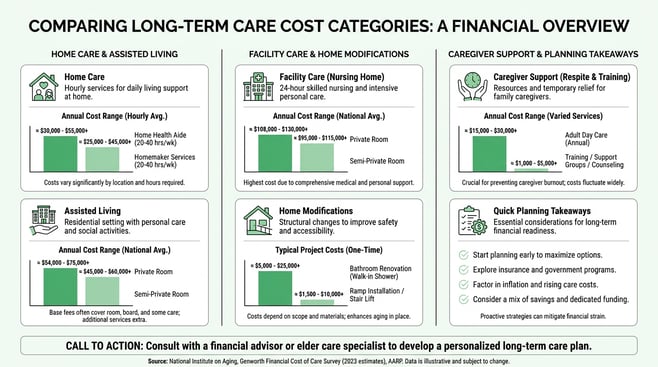
Most households piece together long-term care funding from several sources at once: personal savings, retirement account withdrawals, insurance benefits, and government programs. The mix looks different for every family, and that variation matters because each source comes with its own rules, limits, and tradeoffs for retirement income and taxes.
Here are the main ways families pay for care, and what to keep in mind about each:
The National Institute on Aging notes that planning ahead gives families more options and reduces the pressure of making financial decisions during a health crisis. The goal is not to find one perfect funding source, but to coordinate the right mix across your accounts, insurance, and available benefits before a care event forces the decision for you. How those pieces fit together connects directly to the rest of the household plan, which is where family roles, tax considerations, and asset protection come into the picture.
A care need rarely arrives with advance notice, and several of the most consequential planning moves have deadlines that expire long before the need appears. Medicaid's five-year look-back period starts when assets are transferred, not when care begins. Powers of attorney must be in place before someone loses the capacity to sign them. Understanding how long-term care decisions affect taxes, asset protection, and Medicaid planning before a health event happens is not just good preparation. It determines which options are still available when the time comes.
When one spouse needs care, the other still needs steady income, access to savings, and the ability to make decisions. Federal spousal impoverishment protections allow a community spouse to keep a portion of the couple's assets and income, but those rules have limits and vary by state. Building that protection into the retirement plan early means the healthy spouse is not left financially exposed while managing a care situation at the same time.
Last-minute asset transfers before applying for Medicaid can backfire in a significant way. Medicaid's five-year look-back period means transfers made within that window may trigger penalties and delay coverage. The IRS also requires reporting gifts above the annual exclusion, which is $19,000 per recipient in 2025 and 2026, so a transfer intended for asset protection can create tax obligations too. Early trust and wealth transfer planning gives families room to structure things properly instead of reacting under pressure.
Who has legal authority to act if someone cannot speak for themselves? Powers of attorney, healthcare directives, and account titling determine who can make financial and medical decisions during a care event. Beneficiary designations on IRAs and retirement accounts may also conflict with a care or estate strategy if they have not been reviewed recently. Fortitude's wills and estate planning services address these gaps as part of the broader retirement plan, not as a separate legal task handled in isolation.

Long-term care planning questions often come up in the years just before or after retirement, when insurance options are narrowing, Medicaid timelines may already be running, and the full retirement income picture is coming into focus. The most common ones, on timing, what insurance actually covers, and how families can share responsibility, tend to share one practical concern: what needs to be in place, and how soon.
The short answer: now. AARP recommends starting before a health event forces the decision, because earlier planning preserves more options. If retirement is three to five years out, that window is still workable, but it is narrowing. A retirement planning review can help identify where care costs might pressure your income plan before they actually do.
Insurance is one part of the plan, not the whole plan. A policy helps transfer financial risk and protect cash flow, but it does not address withdrawal strategy, tax consequences, estate documents, or family decision-making authority. Insurance planning works best when it is coordinated with the rest of your retirement picture rather than purchased as a standalone fix.
This conversation is worth having before a care need starts. Research from the National Academies shows that caregivers are often underprepared for the time and intensity of care, which creates strain on families that could have been reduced with earlier planning. Roles, legal authority through powers of attorney, and financial responsibilities should be mapped out together, ideally as part of a broader financial planning conversation that includes estate documents and account titling.
For most people, this is the most common misconception in retirement planning. Medicare generally does not cover custodial care, which is the daily assistance with bathing, dressing, and eating that makes up the majority of long-term care needs. Medicaid may cover nursing home care for those who qualify, but eligibility rules vary by state and require planning well in advance.
When a care need arrives, it doesn't land in isolation. Instead, it runs through the whole retirement picture at once, touching income, IRA withdrawals, taxes, insurance, and estate plans simultaneously. The households that navigate it without derailing everything else are the ones who built room for care costs before a health event forced the question.
Holistic long-term care planning is less about picking the right insurance product and more about knowing which accounts get drawn first in advance, how those withdrawals affect your tax bracket and Medicare costs, and whether the right people have legal authority to act if needed. A coordinated review, grounded in your actual income, accounts, and estate structure, gives you that clarity before a health event closes the options. Fortitude Wealth Planners connects retirement income, tax planning, insurance, and estate considerations into one strategy, so when care enters the picture, it is already part of the plan.